

Condition Based Maintenance Matters
It’s the engagement of People that counts

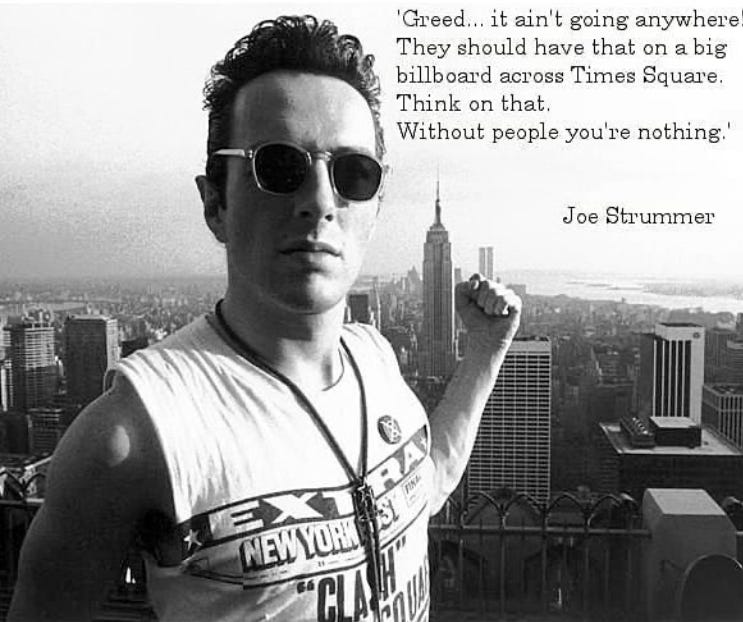
One of my favourite lyricists is the late great Joe Strummer, he hit the nail on the head many times for me, one of the most insightful things he said was…
“Greed, it ain't going anywhere. They should have that in a big billboard across Times Square. Without people you’re nothing” Joe Strummer
It wasn’t a lyric to a song but something Joe said, I think when he recorded some radio shows with his favourite tracks, it struck a chord with me (pun intended) and it’s something I’m still reminded of, especially when it comes to new tools or technology applied in maintenance.
My last post talked about why some engineers are reticent or unwilling to go down the CBM route, in that I gave a little hope at the end that all is not lost.
The main thing to consider when implementing any new maintenance strategy is to realise you have a problem in the first place, and that without change everything will stay the same.
The status quo is an option, one that’s often accepted, the alternative involves some hard work and actually talking to your engineers…. even asking them how they feel!
If you are hatching a plan to introduce CBM with your workforce then the first thing to note is that it has to be driven from the top, without the full engagement and backing of the site leadership team you are on a slow train bound for Failure Central!
Step two is to involve everyone, be open and honest then there’s less chance of misunderstandings later on, get straight to the point - there will be change, and that you understand some may find it difficult but they will be supported.
The third step is once everyone is made aware of the change drop the bombshell that they WILL be involved in the delivery, if you try to impose the change you’ll hit a brick wall, however if you engage in workshops and discussions where they all have a hand in making informed decisions then they will OWN any new process.
The aim should be to make them the arbiters of the change towards a proactive less reactive future.
What’s in it for me? It’s their most important question to answer.
By default most engineers want (and look for) an easy life, it’s what we do, we are driven to find the ‘best way’ which is often a pseudonym for the quickest or easiest. Notice that engineers also like to ‘save time’ this HAS to be on your list of items to ‘sell’ CBM to your working group.
You must demonstrate that CBM will make their working lives easier, safer, save time, and be less frustrating - then you are half way there.
Don’t misinterpret what I’ve just said as ‘this is going to be easy’ it’s not.
The Demographics of engineers working in the maintenance sector is on the high side, in the US the median age (2011) is 47 years old, 91% of them are male, 9% female - which has less than doubled in the past ten years. Many I come across are approaching retirement, so the case for adopting new working practices needs to made even more for that group.
The saying ‘teaching an old dog new tricks’ some say applies here, from my experience of training and mentoring experienced engineers this is often proven to be a fallacy. Another saying that does ring true ‘their bark is much worse than their bite’.
I’ve find most engineers are receptive to change if it is framed to their advantage… not all but most.
Another key is to identify the leaders, there’s always one or two that their colleagues will look up to, if you can get them to move first their workmates will follow… failing that then aim to bring the majority along with you and likewise the remainder should join in.
By demonstrating that their skill set will be improved and supported it will help, so make sure a training budget is made available and be able to justify the return on investment to the management team.
I’m not going into the details of ROI now as I aim to keep these posts succinct, it may be a subject that appears in a follow up post.
I hope that has given you some things to ponder, if you’re in the UK and looking for some support changing your maintenance strategy it’s what we do at UPTIME Consultant Ltd
We have experience of helping reactive maintenance teams transform into proactive and predictive engineers, so we may be able to help you out. Andy Gailey